Loading Events

Eugène Emmanuel Viollet-le-Duc is widely celebrated as a draughtsman, architect, and restorer of medieval buildings. A national hero in France, Viollet-le-Duc tends to be plucked out of the complex nexus of colonialism and nationalism which molded much of his thinking. Indeed, Viollet-le-Duc’s friendship with Arthur de Gobineau, who wrote the Essay on the Inequality of the Races, is understudied given that Gobineau’s theories of race inflected the architect-scholar’s thinking from the 1850s until his death in 1878. Such theories of racial development allowed comparisons between the “primitive” nature of the medieval and the “primitive” quality assigned to the art newly introduced to Western Europe by colonization. In this lecture, Risham Majeed examines how medieval sculpture came to be racialized and understood as “primitive” and “originary” through Viollet-le-Duc’s design for its display in the museums of the Trocadéro Palace (1878–1937).

A Lee B. Anderson Memorial Lecture

Lee Anderson, who worked for a time as an arts education teacher, has been referred to as the godfather of the Gothic revival in America. It is largely because of his impressive personal collection that the style has been rekindled among designers and other tastemakers. Lee passed away in 2010, but he left a legacy of philanthropic support through the Lee B. Anderson Memorial Foundation, whose mission is to support programs and organizations that advance an appreciation for the decorative arts.

This event is presented in conjunction with Viollet-le-Duc Drawing Worlds, on view at the BGC Gallery through May 24.


Risham Majeed (PhD, Columbia University) was born in Lahore, Pakistan, and grew up in Saudi Arabia and London. She specializes in medieval art in Western Europe and the historical arts of Africa. Her research has revealed the parallel reception of the two fields during the emergence of art history as a discipline, which is the topic of her book project, Primitive Before Primitivism: Medieval and African Art in the 19th Century. Current projects include an examination of sub-Saharan Africa in conversation with Asia and Europe during the medieval period, forthcoming from Cambridge University Press. She is also curating an exhibition, Africa in the World: materials without end, which will open at the Handwerker Gallery in March 2026.

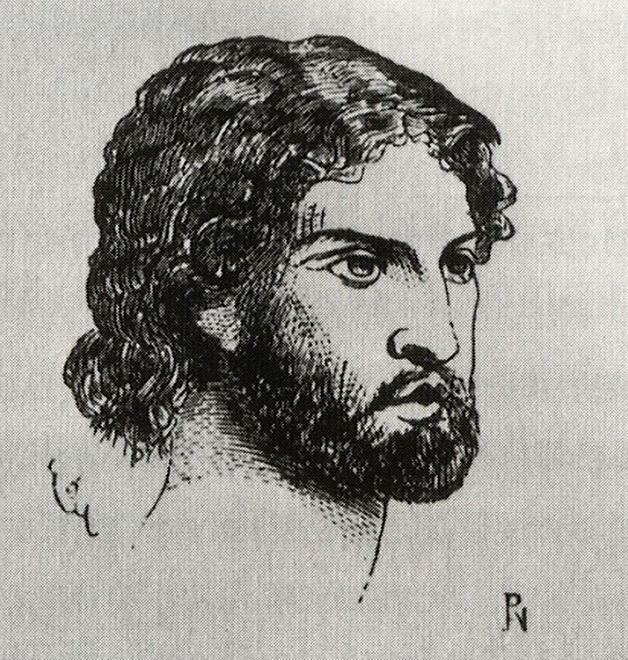
Image: E.E. Viollet-le-Duc, Aryan in Histoire de l’habitation humaine, 1875. 
Events, Upcoming
Share:

Gothic Aryan: Viollet-le-Duc and the Museums of the Trocadéro; A lecture by Risham Majeed

Eugène Emmanuel Viollet-le-Duc is widely celebrated as a draughtsman, architect, and restorer of medieval buildings. A national hero in France, Viollet-le-Duc tends to be plucked out of the complex nexus of colonialism and nationalism which molded much of his thinking. Indeed, Viollet-le-Duc’s friendship with Arthur de Gobineau, who wrote the Essay on the Inequality of the Races, is understudied given that Gobineau’s theories of race inflected the architect-scholar’s thinking from the 1850s until his death in 1878. Such theories of racial development allowed comparisons between the “primitive” nature of the medieval and the “primitive” quality assigned to the art newly introduced to Western Europe by colonization. In this lecture, Risham Majeed examines how medieval sculpture came to be racialized and understood as “primitive” and “originary” through Viollet-le-Duc’s design for its display in the museums of the Trocadéro Palace (1878–1937).

A Lee B. Anderson Memorial Lecture

Lee Anderson, who worked for a time as an arts education teacher, has been referred to as the godfather of the Gothic revival in America. It is largely because of his impressive personal collection that the style has been rekindled among designers and other tastemakers. Lee passed away in 2010, but he left a legacy of philanthropic support through the Lee B. Anderson Memorial Foundation, whose mission is to support programs and organizations that advance an appreciation for the decorative arts.

This event is presented in conjunction with Viollet-le-Duc Drawing Worlds, on view at the BGC Gallery through May 24.


Risham Majeed (PhD, Columbia University) was born in Lahore, Pakistan, and grew up in Saudi Arabia and London. She specializes in medieval art in Western Europe and the historical arts of Africa. Her research has revealed the parallel reception of the two fields during the emergence of art history as a discipline, which is the topic of her book project, Primitive Before Primitivism: Medieval and African Art in the 19th Century. Current projects include an examination of sub-Saharan Africa in conversation with Asia and Europe during the medieval period, forthcoming from Cambridge University Press. She is also curating an exhibition, Africa in the World: materials without end, which will open at the Handwerker Gallery in March 2026.

Image: E.E. Viollet-le-Duc, Aryan in Histoire de l’habitation humaine, 1875. 
Date
March 16, 2026 6:00 pm
Venue
Address
18 West 86th St
New York City, NY 10024 United States

More Events

Events, Upcoming
The Drawing Competition 2026
The National Arts Club
May 2, 2026 10:00 am
Events
Tour of Shadow Visionaries: French Artists Against the Current, 1840-70
Clark Art Institute
February 27, 2026 1:00 pm
Events
Close Looking with the Curator: Brooklyn Bridge from the New York Municipal Archives
The Metropolitan Museum of Art
February 17, 2026 5:30 pm
Events
A Celebration of John Wilson
The Metropolitan Museum of Art
February 3, 2026 6:00 pm

Join The Drawing Foundation community