Loading Events

To mark the two hundredth anniversary of the death of visionary artist and poet William Blake (1757–1827), this exhibition will be the first in-depth exploration of Blake’s profound and persistent engagement with England’s canonic poet, John Milton (1608–1674). Milton, who predates Blake by more than a century, was a statesman, polemicist, and author of the biblical epic Paradise Lost. Yet the legacy of his writings and ideas coursed through Blake’s imagination from youth to old age, taking form in visions, poetry, and the astonishing body of watercolor drawings he produced in the second half of his career.

This exhibition will reunite Blake’s most significant works inspired by Milton, alongside selections by his contemporaries, including Henri Fuseli and John Flaxman. For the first time in more than a quarter century, visitors will gain unprecedented access to Blake’s rarely seen Miltonic watercolors, illuminated books, and paintings, drawn from renowned American and British collections and the Morgan’s own formidable holdings by Blake and Milton.

After 1800, Milton’s poetry rivaled the Bible as Blake’s dominant literary inspiration. Blake’s relationship to the poet and thinker, however, was complex. He confronted and wrestled with Milton’s writings and beliefs. This struggle solidified Blake’s own ideas, yielding his most personal and provocative achievements as a mature artist. Blake’s efforts culminated in his own ambitious epic Milton, A Poem (c. 1804-1801) and the extraordinary sets of watercolor drawings illustrating Milton’s major works: the early lyric poem “On the Morning of Christ’s Nativity” (1629); the companion poems L’Allegro and Il Penseroso (c.1631); the masque Comus (1634); and the epics Paradise Lost (1667; rev. 1674) and Paradise Regained (1671).

Organized by Jennifer Tonkovich, Eugene and Clare Thaw Curator, Department of Drawings and Prints, and Sheelagh Bevan, Andrew W. Mellon Curator, Department of Printed Books and Bindings.
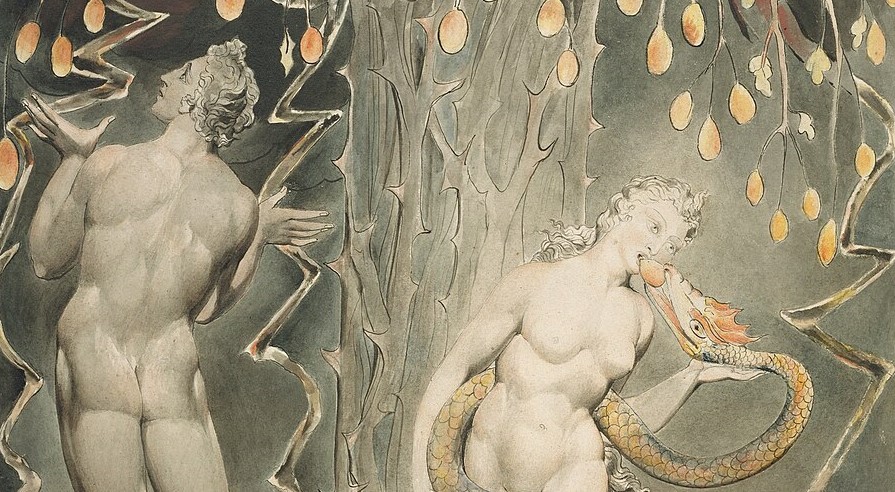
William Blake (English, 1757–1827). The Temptation and Fall of Eve (Illustration to Milton’s “Paradise Lost”), 1808. Black ink and watercolor over graphite on paper. Sheet: 49.7 × 38.7 cm (19 9/16 × 15 1/4 in.). Museum of Fine Arts, Boston, Museum purchase with funds donated by contribution, 90.99. Photograph © 2026 Museum of Fine Arts, Boston
Exhibitions, Upcoming
Share:

William Blake: Paradise Lost

To mark the two hundredth anniversary of the death of visionary artist and poet William Blake (1757–1827), this exhibition will be the first in-depth exploration of Blake’s profound and persistent engagement with England’s canonic poet, John Milton (1608–1674). Milton, who predates Blake by more than a century, was a statesman, polemicist, and author of the biblical epic Paradise Lost. Yet the legacy of his writings and ideas coursed through Blake’s imagination from youth to old age, taking form in visions, poetry, and the astonishing body of watercolor drawings he produced in the second half of his career.

This exhibition will reunite Blake’s most significant works inspired by Milton, alongside selections by his contemporaries, including Henri Fuseli and John Flaxman. For the first time in more than a quarter century, visitors will gain unprecedented access to Blake’s rarely seen Miltonic watercolors, illuminated books, and paintings, drawn from renowned American and British collections and the Morgan’s own formidable holdings by Blake and Milton.

After 1800, Milton’s poetry rivaled the Bible as Blake’s dominant literary inspiration. Blake’s relationship to the poet and thinker, however, was complex. He confronted and wrestled with Milton’s writings and beliefs. This struggle solidified Blake’s own ideas, yielding his most personal and provocative achievements as a mature artist. Blake’s efforts culminated in his own ambitious epic Milton, A Poem (c. 1804-1801) and the extraordinary sets of watercolor drawings illustrating Milton’s major works: the early lyric poem “On the Morning of Christ’s Nativity” (1629); the companion poems L’Allegro and Il Penseroso (c.1631); the masque Comus (1634); and the epics Paradise Lost (1667; rev. 1674) and Paradise Regained (1671).

Organized by Jennifer Tonkovich, Eugene and Clare Thaw Curator, Department of Drawings and Prints, and Sheelagh Bevan, Andrew W. Mellon Curator, Department of Printed Books and Bindings.

William Blake (English, 1757–1827). The Temptation and Fall of Eve (Illustration to Milton’s “Paradise Lost”), 1808. Black ink and watercolor over graphite on paper. Sheet: 49.7 × 38.7 cm (19 9/16 × 15 1/4 in.). Museum of Fine Arts, Boston, Museum purchase with funds donated by contribution, 90.99. Photograph © 2026 Museum of Fine Arts, Boston
Date

February 26, 2027 – May 23, 2027

Venue
Address
225 Madison Avenue at 36th Street
New York, NY 10016 United States

More Events

Events, Upcoming
SAVE THE DATE – DRAWINGS WEEK 2027

January 29, 2027 – February 6, 2027

Current, Exhibitions
Suor Plautilla Nelli: La Prima
Robert Simon Fine Art

October 19, 2026 – November 25, 2026

Events, Upcoming
Drawing Inspiration: Works at the Center of Recent MoMA Exhibitions
MoMA
November 12, 2026 10:00 am
Events
ON DRAWINGS 2026 – Exhibition Tour at the Robert Rauschenberg Foundation
Robert Rauschenberg Foundation
October 22, 2026 2:00 pm

Join The Drawing Foundation community